
High Bandwidth Usage on Servers: Causes, Risks, and Prevention
High bandwidth usage is something almost every server owner encounters at some point. It often starts quietly—pages load a bit slower, monthly data transfer climbs, or hosting bills increase. Left unchecked, high bandwidth usage can turn into performance issues, unexpected costs, or even downtime. Understanding why bandwidth usage increases and how to prevent it proactively is essential for maintaining a healthy server environment.
1.What High Bandwidth Usage Really Means
Bandwidth is the amount of data your server sends and receives over the network. High bandwidth usage happens when data transfer exceeds normal expectations, either gradually or in sudden spikes. This affects all types of infrastructure, including VPS, dedicated servers, cloud platforms, and managed hosting environments.
Because bandwidth issues don’t always trigger immediate failures, they’re often discovered only after users start experiencing slow performance.
2.Common Causes of High Bandwidth Usage
- Sudden Traffic Spikes
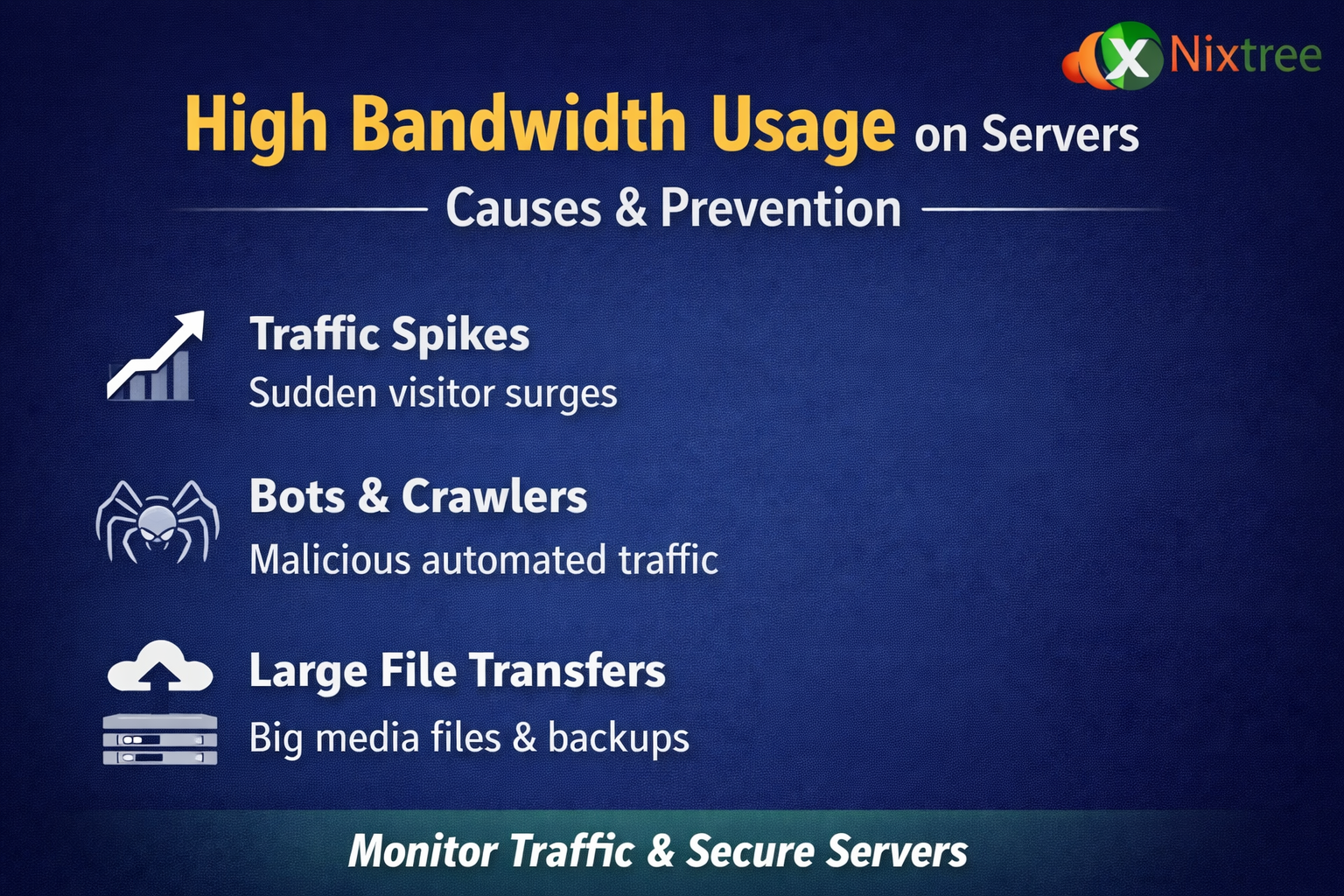
Unexpected traffic increases are one of the most common causes. Product launches, promotional campaigns, viral content, or seasonal demand can drive large volumes of visitors to a server in a short period of time. Without proper preparation, bandwidth consumption can rise quickly.
- Inefficient Website or Application Design
Websites that rely heavily on large images, videos, frequent API calls, or repeated data transfers can consume far more bandwidth than necessary. Over time, these inefficiencies add up and strain server resources.
- Bots and Automated Traffic
Not all traffic comes from real users. Search engine crawlers, monitoring tools, scrapers, and automated scripts can generate thousands of requests per day. When unmanaged, this type of traffic contributes heavily to high bandwidth usage.
- Malicious Activity
DDoS attacks, brute-force attempts, and scanning tools are designed to flood servers with requests. Even small or short-lived attacks can cause noticeable bandwidth spikes and performance degradation.
- Backup and Synchronization Tasks
Regular backups, offsite syncing, and database replication are essential—but they also move large amounts of data. If these processes run too frequently or without optimization, they can significantly increase bandwidth usage.
3.Why High Bandwidth Usage Is a Problem
Excessive bandwidth usage doesn’t just affect network statistics—it has real business consequences:
Slower website and application performance
Increased hosting or cloud costs
Greater risk of downtime during peak traffic
Difficulty identifying security incidents
Poor user experience and reduced trust
For hosting companies and SaaS platforms, these issues can affect many customers at once.
4.Preventing High Bandwidth Usage Before It Escalates
- Better Visibility and Monitoring
Knowing what traffic looks like under normal conditions makes it easier to spot problems early. Ongoing monitoring helps identify unusual patterns before they impact performance.
- Smart Traffic Management
Separating legitimate users from unnecessary or harmful traffic ensures that bandwidth is used where it matters most.
- Infrastructure and Capacity Planning
Bandwidth issues often point to planning gaps. Aligning infrastructure with actual usage trends helps prevent recurring problems as traffic grows.
- Security-Focused Server Management
Many bandwidth spikes are linked to security weaknesses. Proactively secured servers reduce exposure to abusive and malicious traffic.
- Ongoing Expert Oversight
Bandwidth control is not a one-time task. Managed server services ensure continuous optimization, security, and cost control as workloads evolve.
For general networking and server best practices, trusted resources such as Linux.org and the Apache Software Foundation provide reliable guidance.
High bandwidth usage doesn’t happen by accident—it’s usually the result of traffic growth, inefficiencies, or security gaps. Addressing these issues early helps protect performance, control costs, and maintain uptime.
Contact Nixtree for a free consultation to learn how proactive server management can help you prevent bandwidth issues before they affect your business.